
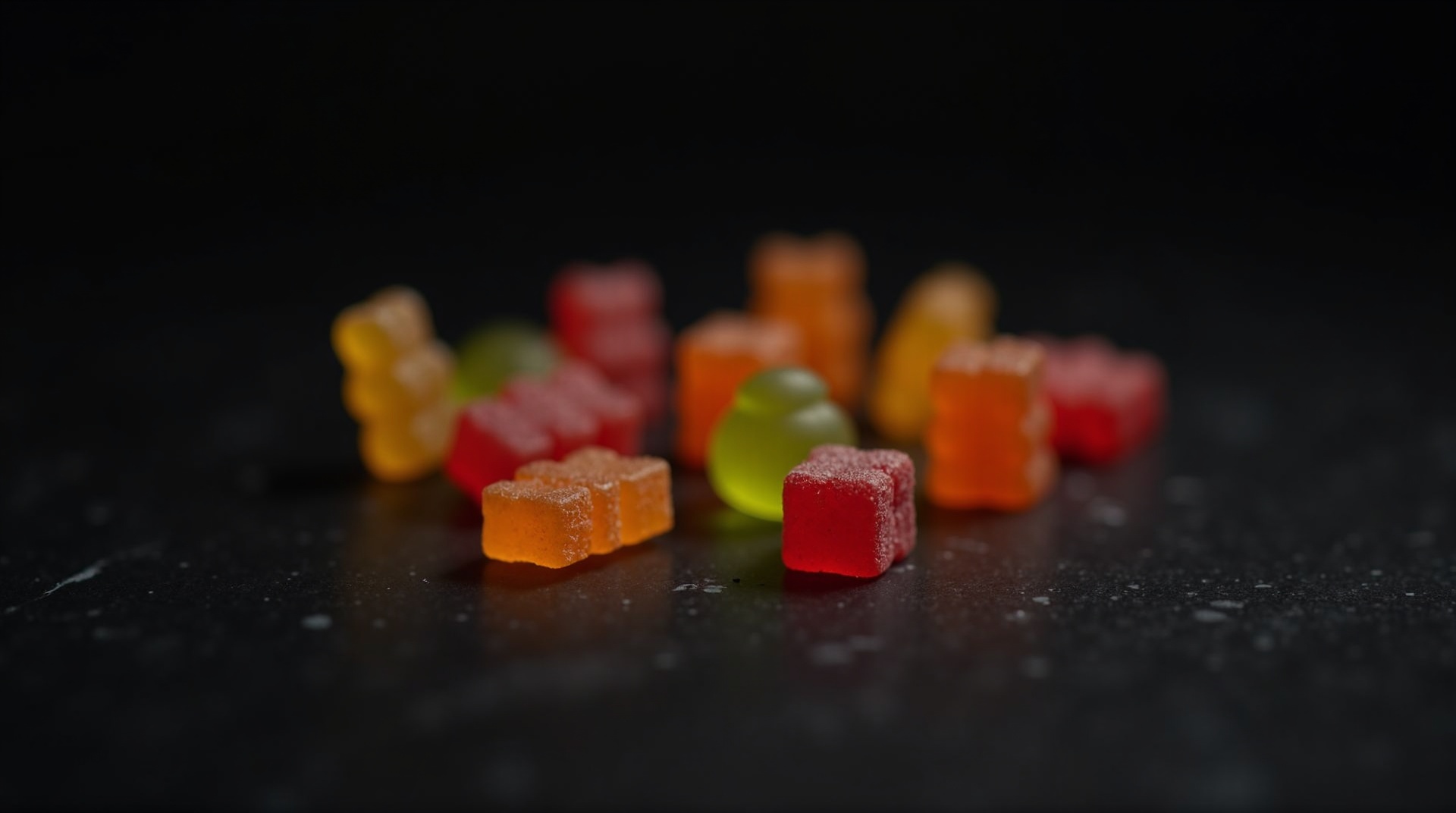
Gummies are the format customers love and brand owners underestimate. From the outside, a supplement gummy looks simple — candy with benefits. Inside, it’s one of the hardest formats to formulate well, especially sugar-free. The brands that treat a gummy like a candy with vitamins thrown in end up with underdosed, unstable products that taste off by month three. The ones that respect the complexity build a category winner.
Here’s what brand owners need to know about the real formulation challenges behind sugar-free gummy supplements.
A gummy is a precise piece of food science. It has to hold an accurate dose of active, stay stable across temperature and shelf life, taste good, and have the right texture — all at once. Change one variable and the others move. That’s why a gummy that’s easy to love is hard to make, and why “just make it a gummy” is the start of the work, not the end.
A gummy can only hold so much active before texture and taste fall apart. For many ingredients, a clinical dose simply won’t fit in one or even two gummies. Brand owners must decide honestly: increase the serving size (more gummies per dose), accept a lower dose, or choose a different format. The failure mode is a one-gummy product implying a clinical benefit it can’t deliver. Label the real per-serving dose and design the serving size around the effective amount.
Sugar isn’t just sweetness in a gummy — it contributes to texture, structure, and preservation. Removing it means rebuilding those functions with sugar alcohols, fibers, or other systems, each with trade-offs:
Sugar-free is now the expectation in much of the market, but it’s a genuine reformulation, not a simple swap.
Gummies are tough on actives. Heat during manufacturing and storage, moisture, and the acidic gummy environment can degrade sensitive ingredients — which is why some actives need an overage so the labeled dose still holds at expiration. Stability testing isn’t optional for a gummy; it’s how you know the product on month twelve still matches the label.
| Factor | Why It Matters in a Gummy |
|---|---|
| Heat sensitivity | Manufacturing heat can degrade fragile actives |
| Taste of the active | Bitter or strong actives are harder to mask in a chew |
| Moisture & pH | The gummy environment can affect potency over time |
| Overage needs | Sensitive actives may require extra at manufacture |
A gummy can only carry so much active before its taste and texture break down. For many ingredients a clinical dose won’t fit in one piece, so brands must increase the serving size or accept a lower dose — and label the real per-serving amount.
Yes. Sugar contributes to a gummy’s texture, structure, and preservation, so removing it requires rebuilding those functions with sugar alcohols or fibers, each with taste, texture, and tolerance trade-offs. It’s a genuine reformulation.
Absolutely. Heat, moisture, and the acidic gummy environment can degrade actives over time, so stability testing — and overages for sensitive ingredients — is how you ensure the labeled dose still holds at expiration.
Building a gummy that actually delivers? UniWell Labs formulates sugar-free gummies with honest dosing, stability data, and taste that earns repeat purchases. Talk to our team about your gummy line.