
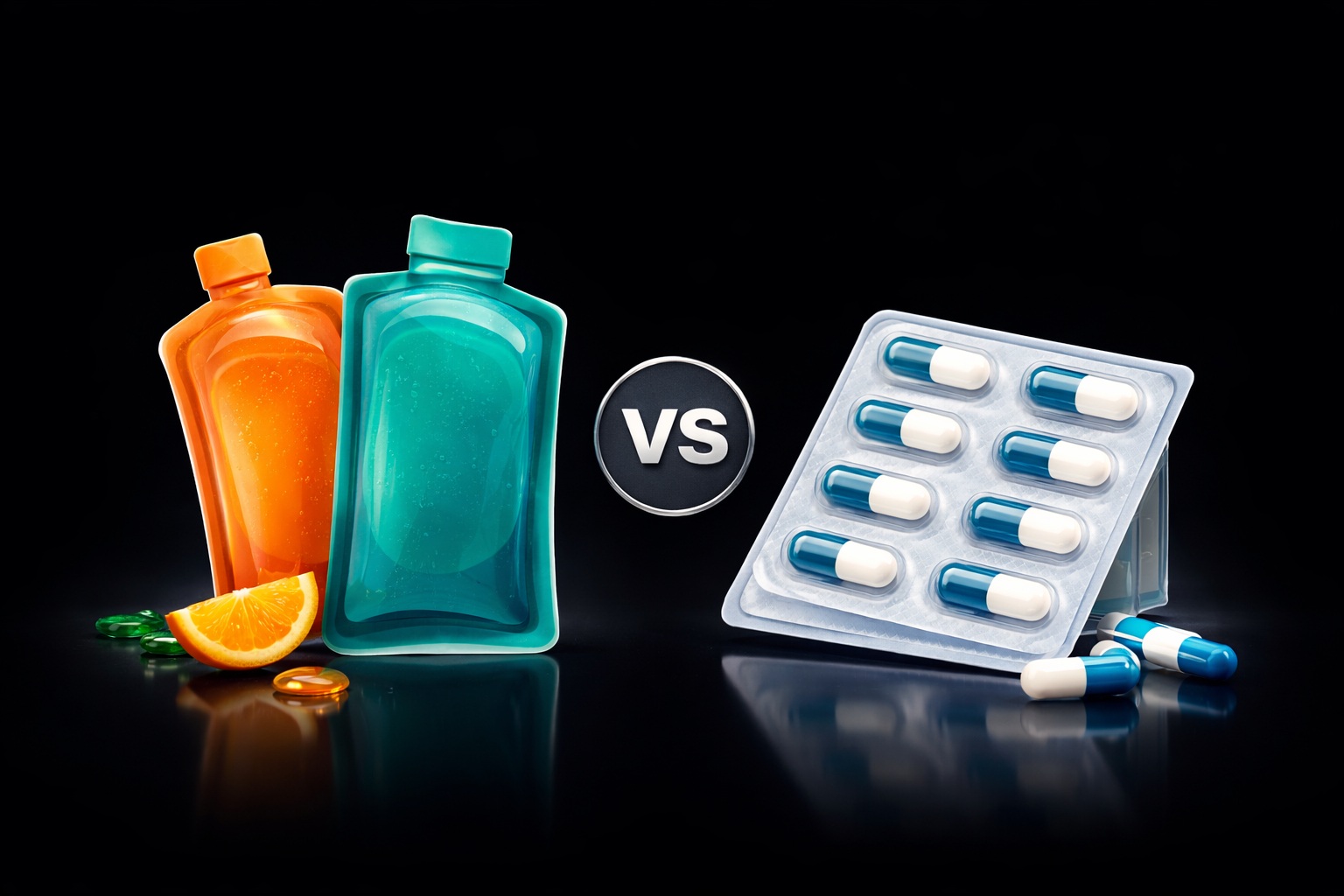
Do liquid gels work better than tablets to get the most from your supplements? This question has become more relevant as the global dietary supplements market is expected to hit $327.42 billion by 2030.
The debate between liquid gels and tablets comes down to a vital factor: your body’s nutrient absorption rate and completeness. Liquid supplements take just 5-10 minutes to absorb since they don’t need any breakdown process. Softgel capsules provide higher bioavailability than traditional tablets. But tablets have their strengths too—they last longer on the shelf and are budget-friendly options.
We’ve dug into the scientific evidence and weighed the advantages and drawbacks of each format. Our research shows clear winners for specific situations. This piece will help you pick the right supplement format that delivers better results based on your needs, whether you want quick effects or plan to take supplements long-term.
The way supplements interact with our bodies helps explain why liquid gels and tablets work differently. These supplement forms take different paths through our systems, which affects how quickly they work and how well they do their job.
The main difference between these formats comes down to their physical state when you take them. Your digestive system needs to process tablets through multiple steps before you get any benefits:
Disintegration: The tablet breaks down into smaller particles
Dissolution: These particles dissolve in digestive fluids
Absorption: Active ingredients can then cross intestinal walls into bloodstream [1]
Liquid gels work differently. They already have active ingredients dissolved inside a gelatin shell. The shell breaks open in your digestive tract, and the liquid contents are ready for absorption right away—no breakdown needed [2]. This makes a big difference in the small intestine, where dissolution speed directly affects how fast ingredients reach your bloodstream [1].
Bioavailability tells us how much of a supplement actually reaches your bloodstream and becomes useful. The format you choose makes a big difference.
Liquid gels usually have better bioavailability because their pre-dissolved state lets your body absorb more active ingredients [3]. This becomes especially important with fat-soluble compounds like vitamins A, D, E, K, and ingredients like CoQ10 or omega-3s that don’t dissolve easily in water [2].
Research shows that softgel capsules deliver more active components where they need to go. They work better for certain compounds because the liquid format doesn’t face the same dissolution challenges as tablets [1].
You’ll notice the biggest difference between these formats in how fast they start working. Research about ibuprofen shows that liquid gels provided better pain relief at 60, 90, and 120 minutes compared to tablets. Interestingly, there was no difference at the 30-minute mark [4].
Other studies show that softgels release nutrients into the body faster than tablets or regular capsules [5]. Liquid gels can start working in minutes since they’re already in an emulsified state or paste. Tablets take longer because they need time to break down into a usable form [6].
The evidence isn’t clear-cut, though. A systematic review comparing ibuprofen liquid gels to tablets showed that while liquid gels worked faster for pain relief, the difference wasn’t as dramatic as most people think [4]. It also turns out that some quick-release gelcaps can sometimes dissolve more slowly than regular tablets from the same brand [7].
Liquid gels show their best advantage when you need quick results, like with pain relievers or pre-workout supplements where every minute counts.
Liquid gels are a modern breakthrough in supplement delivery. They offer clear benefits but also come with some drawbacks. Let’s look at how they stack up against tablets to see which option might work better for different needs.
Liquid gels are champions at quickly delivering active ingredients. The ingredients inside are already liquid, so your body absorbs them faster [8]. This makes them great for compounds that don’t mix well with water [6]. Research backs this up—studies show that ibuprofen in liquid gel form reaches higher levels in the blood and peaks faster than regular tablets [9]. On top of that, it takes just minutes for liquid gels to start working, while tablets need extra time to break down [6]. Take ibuprofen as an example – liquid gels showed pain relief in about 24.2 minutes [link_2], which beats most tablet forms [9].
The smooth, odorless coating helps liquid gels slide down easily [8]. This is a big plus for kids, older adults, and anyone who has trouble swallowing pills [10]. You won’t find the chalky taste or dry feeling you get with tablets [8]. Companies like Advil have even created “minis” – they’re 33% smaller but pack the same punch [11]. People tend to stick to their medication schedule better because these pills are easier to take.
The benefits of liquid gels come at a price. They cost more to make than tablets, and this shows up in store prices [10]. They don’t last as long on the shelf either [7]. The gelatin shell creates another issue—it’s usually made from animal products, so it’s not suitable for vegetarians or people keeping kosher [7]. You’ll need to weigh these practical issues against the performance benefits.
Not everything works in a liquid gel format. These capsules are picky about what they can hold [8]. The gelatin shells don’t play nice with certain ingredients like glycerin, propylene glycol, and liquid polyethylene glycols – they can make the capsules brittle and break [12]. Hard-gelatin capsules also clash with things like ethanol, glycerol, and propylene glycol [13]. Tablets are more flexible – they can mix different ingredients and offer various release times [8]. So for complex formulas with multiple active ingredients, tablets often work better and stay stable longer.
Tablets are still the foundation of the supplement industry. They offer clear advantages that make them the better choice in many cases. You should know both their strengths and limits to figure out when this classic format works better than newer options.
Tablets stand out for their durability and cost savings. They stay stable longer than liquid gels, which is vital for active ingredients that react to humidity and temperature [1]. This extra stability means you won’t need to replace them as often, and you’ll waste less.
The manufacturing costs of tablets are lower. Production lines can handle bigger batches quickly, which cuts down the cost per tablet [1]. In fact, tablets use cheaper ingredients than the gelatin or plant-based materials needed for capsules [1]. High-speed presses can make 1,000,000+ tablets hourly, while capsule machines only produce about 210,000 per hour [14]. This makes tablets much cheaper to produce at scale.
The biggest challenge with tablets is how long they take to work. Tablets must go through three steps before they start working:
They break down into tiny pieces
Digestive fluids dissolve them
The intestinal walls absorb them
The additives used and how hard the tablet is pressed affect its breakdown speed [15]. Blood levels might spike too high if a tablet releases ingredients faster, or the drug might pass through without working if it releases too slowly [15]. Companies carefully create tablets to release at the right speed, but this naturally takes longer than liquid gels.
Tablets really excel with complex formulas. The way they’re made allows for controlled release profiles, which means better and steadier absorption with options for fast, delayed, or extended release [14]. This stability advantage becomes vital for daily multivitamins or medications that need exact dosing over time.
The most common complaint about tablets is swallowing difficulty. A nationwide survey shows 40% of American adults struggle to swallow pills even though they have no trouble with food or drinks [3]. This “pill dysphagia” can come from several things like sensitive gag reflex, GERD, anxiety, or bad taste [3].
Most people tilt their head back to swallow tablets, but this can be dangerous because it opens the airway [3]. Keeping your head level or tucking your chin toward your chest is safer [3].
Scientific evidence and user needs show which formats work best in different situations. Let’s get into scenarios where certain forms work better than others.
Timing matters most for pre-exercise energy boosts. Liquid gels deliver carbohydrates faster because they need minimal digestion. Athletes can fuel up minutes before their activity thanks to this thinner, fluid format [2]. Your bloodstream gets more usable energy because this format makes shared delivery of multiple carbohydrate types possible [2]. Runners and cyclists prefer liquid gels right before or during exercise when they need quick energy uptake [16].
Collagen supplements need stable, consistent delivery to improve skin’s elasticity, hydration, and reduce wrinkles [17]. Research shows that taking oral collagen tablets over 12+ weeks substantially improves skin elasticity (3.25, 95% CI 2.33, 4.18) [18]. Tablets protect these complex protein structures better from breaking down and stay potent longer on the shelf.
Athletes can lose up to 2 quarts of fluid per hour during intense activity—and up to 3 quarts in endurance activities [19]. Liquid gels excel at delivering electrolytes faster when dehydration threatens performance. Your body absorbs critical minerals like sodium and potassium more quickly because these gels dissolve immediately [19]. These forms help especially when you need to restore fluid and electrolyte balance during activities.
Recovery starts the moment training ends. Liquid recovery gels help muscles heal faster by sending anti-inflammatory compounds straight to damaged tissues [20]. Blood flows better to injured areas, so natural healing nutrients reach them quickly [20]. These gels work great when you can’t eat solid food after intense workouts because they’re easy to consume and digest [4].
Tablets make more sense for daily supplements. They last longer on shelves and cost less to produce, making them perfect for regular use [21]. Most adults can get nutrients from a balanced diet. However, people over 50, pregnant women, or those with restricted diets benefit from tablet supplements [22]. Complex vitamin and mineral combinations stay stable in tablet form, giving you consistent doses throughout their shelf life.
Your specific situation helps determine which supplement format works best. The physical makeup of liquid gels and tablets affects how long they last, where you store them, and how you ship them.
Tablets last longer than liquid gels. They stay stable and potent for about 2 years, while liquid gels last only about 1 year [7]. This happens because tablets resist environmental factors better [23]. Their solid, compressed state limits exposure to elements that could break them down.
Liquid gels need extra protection in their packaging. You’ll find them in foil pouches, dark bottles, or blister packs with special barrier film that prevents sticking and oxidation [8]. Tablets are easier – they stay stable in most containers [8]. Blister packs give the best protection for both types, but they cost more. This matters if you take supplements regularly.
Temperature really affects how well supplements hold up. Heat and humidity can damage liquid gels’ gelatin shell [10]. Both formats stay best in cool, dry spots away from sunlight [5]. Tablets handle temperature changes much better than liquid gels [10].
Tablets are easier to ship for several reasons. They stay stable better, so you can move and store them in bulk [8]. Liquid gels usually need temperature-controlled shipping with special carriers that track temperature and location in real time [24]. This makes shipping liquid gels more expensive – something to think over when you order supplements online or from other countries.
|
Characteristic |
Liquid Gels |
Tablets |
|
5-10 minutes |
Takes longer with multiple breakdown steps |
|
|
Bioavailability |
Higher, particularly for fat-soluble compounds |
Lower since it needs to dissolve |
|
Ease of Swallowing |
Smoother and easier to take |
Challenging, 40% of adults have trouble |
|
Shelf Life |
~1 year |
~2 years |
|
Cost |
Higher production costs |
More economical |
|
Storage Requirements |
Sensitive to temperature and humidity |
Stable with basic storage needs |
|
Ingredient Compatibility |
Limited; some compounds don’t mix well |
Handles complex formulations better |
|
Manufacturing Efficiency |
Lower production rates |
Produces 1,000,000+ tablets per hour |
|
Best Use Cases |
– Pre-workout supplements |
– Daily multivitamins |
|
Packaging Needs |
Needs special protective packaging |
Basic packaging works well |
|
Temperature Sensitivity |
Highly sensitive |
Handles temperature changes better |
|
Release Control |
Immediate release |
Multiple options (immediate, delayed, extended) |
The evidence reveals that both liquid gels and tablets excel in their respective areas, with neither consistently outperforming the other. Liquid gels take the lead at times when quick absorption counts most. They deliver results in just 5-10 minutes while tablets take longer to break down. This feature makes liquid gels perfect to use before workouts to relieve pain fast or to replenish electrolytes during heavy exercise.
Tablets prove their worth in daily supplement routines. They last longer on the shelf (about 2 years compared to liquid gels’ 1 year), cost less, and keep complex formulas more stable. These qualities make tablets a smart pick to take vitamins and supplements like collagen that you need regularly.
The science of bioavailability definitely favors liquid gels, especially when you have fat-soluble compounds like vitamins A, D, E, and K. All the same, many manufacturers prefer making tablets because their machines can produce over 1 million tablets hourly.
Real-world factors play a vital role too. Tablets handle temperature changes better and don’t need special packaging. Liquid gels, on the other hand, need extra protection to stay intact. On top of that, it helps that liquid gels are easier to swallow – a big plus for the 40% of American adults who struggle with pills, even if they cost more.
Your unique situation should guide what you pick. If you want quick results, liquid gels work faster and often absorb better. Tablets give you better value and stability for daily supplements where consistency matters more than speed. Still not sure which format fits your needs best? Reach out to us at uniwelllabs.com for customized advice on picking the right supplement format for your health goals.
Many people love how easy liquid gels are to use. The budget-friendly nature and stability of tablets make them the foundation of supplement options. The best choice between the two depends on what you value most – quick results or long-term value.
Understanding the differences between liquid gels and tablets helps you choose the right supplement format for your specific health goals and lifestyle needs.
• Liquid gels absorb 5-10x faster than tablets, making them ideal for pre-workout energy, pain relief, and immediate hydration needs where timing matters most.
• Tablets offer 2x longer shelf life and lower costs, making them the practical choice for daily multivitamins and long-term supplementation routines.
• Bioavailability favors liquid gels for fat-soluble vitamins (A, D, E, K) and compounds like CoQ10, while tablets excel at complex formulations requiring stability.
• Choose liquid gels for immediate results and tablets for consistency – your specific needs should determine the format, not marketing claims about universal superiority.
• 40% of adults struggle swallowing tablets, making liquid gels a valuable alternative despite their higher cost and specialized storage requirements.
The bottom line: Neither format is universally better. Liquid gels win for speed and absorption, while tablets dominate for cost-effectiveness and stability. Match your supplement format to your specific health goals and usage patterns for optimal results.
Q1. Are liquid gels more effective than tablets for quick absorption? Liquid gels generally absorb faster than tablets, typically within 5-10 minutes. This makes them more effective for situations requiring rapid onset, such as pre-workout supplements or pain relief. However, tablets are often preferred for long-term, consistent supplementation.
Q2. Which form is better for daily multivitamins: tablets or liquid gels? Tablets are generally better for daily multivitamins. They offer a longer shelf life (about 2 years compared to 1 year for liquid gels), are more cost-effective, and provide better stability for complex formulations typically found in multivitamins.
Q3. Do liquid gels have higher bioavailability than tablets? Yes, liquid gels typically offer higher bioavailability, especially for fat-soluble compounds like vitamins A, D, E, and K. This is because the active ingredients are already in a dissolved state, allowing for easier absorption in the digestive tract.
Q4. Are liquid gels easier to swallow than tablets? Many people find liquid gels easier to swallow due to their smooth, gelatin exterior. This can be particularly beneficial for those who have difficulty swallowing pills, which affects about 40% of adults. However, this advantage comes with a higher cost and shorter shelf life.
Q5. How do storage requirements differ between liquid gels and tablets? Liquid gels are more sensitive to environmental factors like temperature and humidity, often requiring specialized protective packaging and cooler storage conditions. Tablets, on the other hand, are more stable and can tolerate a wider range of storage conditions, making them easier to store and transport.
[1] – https://www.colorcon.com/education-insights/tablet-vs-capsule-what-costs-more-to-produce
[2] – https://guenergy.com/products/liquid-energy?srsltid=AfmBOoo0kXkK2nnEHczrUrPRQQ1wdMoMuM_59SiWN-GSwjN98GCnCyBD
[3] – https://health.mountsinai.org/blog/swallowing-pills-made-easy/
[4] – https://purendure.com/blogs/blog-posts/post-workout-recovery-how-natural-gels-help-replenish?srsltid=AfmBOooaKoHqhtEcB-pSKXctxeGMydBbNolgggE473vNqtUOuhTFwdOP
[5] – https://rouzelpharma.in/2024/09/19/storage-of-tablets-capsules-and-softgels-in-homes-accurate-dosage-and-timings/
[6] – https://www.soft-gel.com/blog/softgels-capsules-tablets-which-is-best/
[7] – https://www.health.com/condition/headaches-and-migraines/gel-caps-or-coated-pick-the-right-pill
[8] – https://www.chinacanaan.com/blog/softgels-vs-tablets-key-differences-you-should-know/
[9] – https://pubmed.ncbi.nlm.nih.gov/11697757/
[10] – https://www.robinsonpharma.com/softgels-vs-tablets-and-capsules-a-comprehensive-comparison/
[11] – https://www.advil.com/our-products/advil-pain/advil-liqui-gels-minis?bvstate=pg:42/ct:r
[12] – https://www.pharmaexcipients.com/news/selecting-excipients-for-liquid-filled-hard-capsules/
[13] – https://www.pharmtech.com/view/selecting-excipients-liquid-filled-hard-capsules
[14] – https://www.lfatabletpresses.com/nl/tablets-vs-capsules
[15] – https://www.merckmanuals.com/home/drugs/administration-and-kinetics-of-drugs/drug-absorption
[16] – https://www.precisionhydration.com/performance-advice/nutrition/how-to-choose-energy-format-gels-chews-bars-drinks/?srsltid=AfmBOor3gnKtsqgi6iU-QkDUmkuORyuDsXWqCAtKQs4K01M_SpaGH6B8
[17] – https://www.health.harvard.edu/blog/considering-collagen-drinks-and-supplements-202304122911
[18] – https://pmc.ncbi.nlm.nih.gov/articles/PMC10180699/
[19] – https://www.hopkinsmedicine.org/health/wellness-and-prevention/nutrition-and-fitness/sports-and-hydration-for-athletes
[20] – https://www.therapiabyaroma.com/muscle-recovery-gel-menthol-crystal/
[21] – https://www.houstonmethodist.org/blog/articles/2022/sep/do-multivitamins-actually-do-anything/
[22] – https://healthy.kaiserpermanente.org/southern-california/health-wellness/healtharticle.do-you-need-a-multivitamin
[23] – https://www.healthline.com/health/capsule-vs-tablet
[24] – https://www.fedex.com/en-us/healthcare/pharmaceutical-supply-chain-and-shipping-services.html